Poor power quality could be costing your assets more than you think
October 27, 2026 | 4 min read
Harmonic distortion can affect equipment reliability, asset life and operating costs. Discover how Delta Active Power Filters can help identify and correct power quality issues.

LED lighting, variable speed drives, inverters and other electronically controlled equipment have become commonplace across modern commercial and industrial facilities.
But while these technologies bring greater control and efficiency, they can also introduce harmonic distortion into the electrical network.
Harmonics distort the normal electrical waveform and can contribute to issues ranging from electrical losses and nuisance tripping through to equipment damage, shutdowns and reduced service life. For asset and facility managers, that can translate into an uncomfortable combination: shorter asset life, increased maintenance and failures you didn’t budget for.
Why harmonics matter
Power quality is essentially about supplying equipment with clean, stable power. But as more non-linear loads are introduced into a facility, maintaining that quality can become increasingly important.
The impact isn’t necessarily limited to the equipment creating the harmonics. Distortion within the electrical system can contribute to issues elsewhere in the installation, affecting the reliability and service life of connected infrastructure.
That makes power quality more than an electrical issue.
For an end user, it is ultimately an asset reliability and lifecycle issue.
The question becomes: what is happening on your network, and what is it doing to the equipment downstream?
See the problem before correcting it
There isn’t a one-size-fits-all answer to power quality.
Harmonics, poor power factor and phase imbalance are different issues, and understanding what is happening in real time, across the electrical system is important before deciding how it should be corrected.
That is where a power quality audit can help.
NHP can undertake onsite power quality monitoring to examine factors including voltage, current, frequency, harmonics, power factor, electrical noise and energy demand. From there, the findings can be used to identify power quality issues and determine an appropriate correction strategy.
This could include active harmonic filtering, power factor correction or a combination of technologies, depending on the conditions identified onsite. NHP’s existing power quality material specifically positions its audit and application engineering services as the starting point for determining the appropriate solution.
Actively correcting harmonics
Where harmonic distortion is identified, an Active Power Filter (APF) can provide dynamic correction.
Rather than simply absorbing harmonics, the APF monitors the load and injects a compensation current to counteract distortion in the network.
NHP’s power quality offering includes Delta Active Power Filters designed to mitigate harmonics while also providing power factor and load imbalance correction.
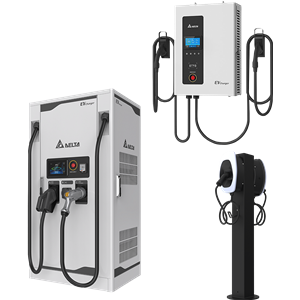
The latest addition to NHP’s power quality offering is the Delta 150A wall-mounted Active Power Filter {link}, bringing higher-capacity active harmonic filtering into a compact wall-mounted format. The unit combines harmonic mitigation, power factor correction and three-phase imbalance compensation within one integrated system.
Its shared-capacity operation allows available capacity to be allocated across harmonic and reactive power compensation according to the requirements of the load. The integrated enclosure also incorporates a touchscreen HMI, with Modbus RTU and Modbus TCP/IP connectivity available for integration and monitoring.
For facilities where switchroom space comes at a premium, the wall-mounted format provides another option for addressing power quality without requiring a traditional floor-standing installation.
From finding the issue to keeping the solution performing
The hardware, however, is only one piece of the power quality story.
NHP's broader offering covers the process from identifying an issue through to implementing and supporting the solution. This includes power quality audits, application engineering, Active Power Filters, Static VAr Generators and combined Total Power Factor Correction solutions, alongside commissioning, preventive maintenance and breakdown support.
That means the conversation can start with the problem rather than the product.
What is happening within the network? Where is the distortion coming from? And what type of correction actually makes sense for the site?
From there, a solution can be designed around the facility's actual power quality requirements.
It's about protecting what's downstream.
Correcting power quality isn’t just about achieving a cleaner electrical waveform.
For asset and facility managers, it’s about protecting critical equipment, supporting longer asset life and reducing the likelihood of failures you didn’t budget for.
Concerned about harmonics or power quality at your facility? Talk to NHP about a power quality assessment and a solution suited to your site's requirements.
Get in touch
For more information or any other inquiries, please don't hesitate to contact NHP. Our team is ready to assist you.